
In a previous review I said that the most effective way of making sense of statistics and generalities is to humanise them by concentrating on a single example. This play takes that premise and extends it, not only to include the way in which we look at a perpetrator, but the way in which they, and their victims, look at each other. This work, written by James Graham and based on a book by Jacob Dunne, tells of the background and consequences caused by a single punch, which led to the death of a young man. What gives it heft is that Jacob Dunne is the assailant who, when he was 19 killed a 28 year-old paramedic for no apparent reason, by throwing the haymaker, causing James Hodgkinson to hit his head on the ground and die in hospital nine days later.
The play is divided into two parts, the first is the backstory of Jacob, the events leading up to the fateful night and his subsequent imprisonment; the second looks at the way in which those closely affected by the crime came together to deal with the fallout.

Jack James Ryan as Jacob
Jacob’s childhood and adolescence was about as stereotypical of a young offender as you could get; raised by a single mother on a council estate, being a problem pupil at school, where rather than being nurtured, he was labelled with everything from dyslexia to ADHD via autism and pigeonholed accordingly. His sense of self-worth only fulfilled by being the alpha male in a gang, which got him mixed up in petty violence and drugs, involving both taking and dealing them.
The only incident which illustrated a crack in the hard-man facade was his encounter with a girl who took a shine to him, as he did to her, and she gave him her number but nothing became of it.
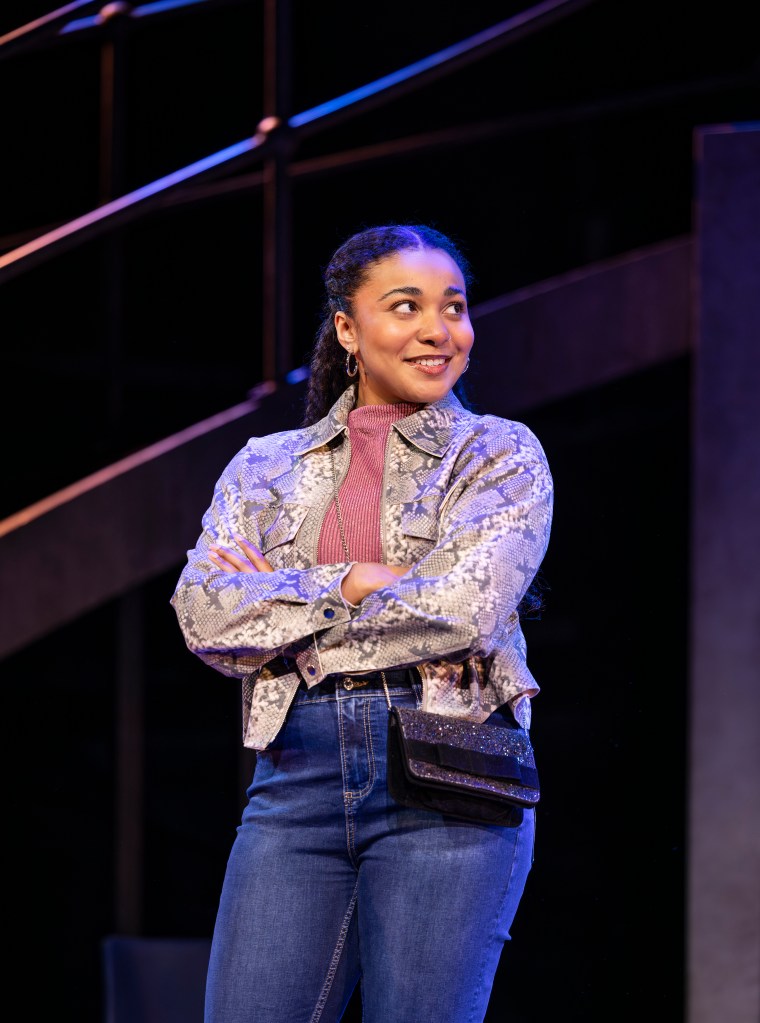
Grace Hodgett Young as Jacob’s love interest
One night he got a phone call from one of his cohorts saying that there was an altercation taking place nearby and could he help. Without a second thought he rushed to the scene of the fracas where he came across James, who he had never seen before, doing nothing in particular, but, as he was deemed guilty by association, Jacob thumped him and he fell to the ground, striking his head as he did so. Jacob fled the scene and was later told that James had been taken to hospital by ambulance.
The A&E Department was busy and James was left for some time before being treated, at which point there was nothing seemingly untoward about his condition so he was kept in with the other patients who were the worse for wear from drink and drugs, to sleep it off. It was not until some time later that it was discovered he had a brain haemorrhage which led to his death nine days after the punch.
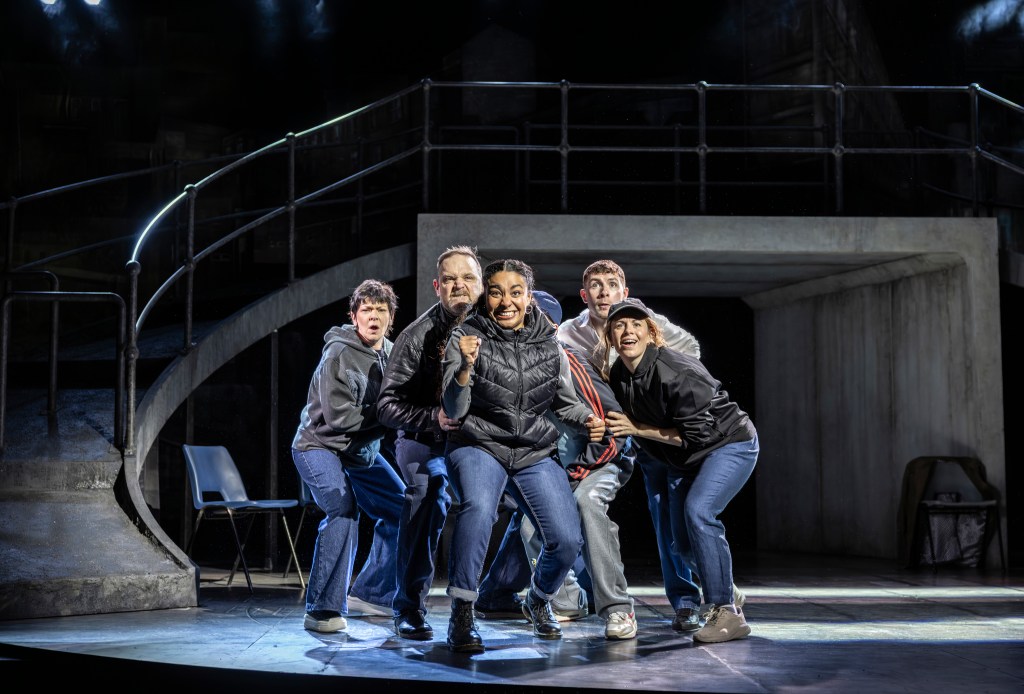
The cast in gang mode. Finty Williams, Matthew Flynn, Grace Hodgett Young, Jack James Ryan and Laura Tebbutt
Jacob was arrested for murder, a charge reduced to manslaughter to which he pleaded guilty. This had the effect of reducing his four-year sentence by a year and, as he was under 21, a further six months was deducted which, with normal remission, meant that he was released after 14 months. A further consequence of his guilty plea was that there was no trial and so no chance for the prosecution to cross-examine him in court to ascertain the circumstances of the crime and provide James’s parents with some sort of explanation. They appealed the sentence but it was dismissed.
On release, Jacob went back to his former lifestyle but was now homeless, unable to live with his mother who was living in squalor, having taken to drink and losing her job following the crime, and his being unable to get legitimate work because of the criminal record.
Just as things seemed to be heading on a downward spiral, Jacob’s probation officer told him that James’s parents had pursued the route of restorative justice, a voluntary process designed to repair the harm done as a result of serious crime, by confronting the consequences and hopefully finding a way forward for all those affected.
The second half of the production was devoted to the method by which this was done and the follow-up from the process. If the pre-crime circumstances of Jacob’s life reflected his textbook route to the fatal punch, the post-prison story was the kind of narrative more associated with fable rather than real life.
The restorative justice process began with James’s parents, Joan and David, speaking to a facilitator who asked what questions they would like answering by Jacob. The idea was that they would write them down and, should he wish to engage in the exercise, the answers would also be written. There were the obvious ones, as to why he threw the punch and then ran away when he saw that James was in distress and why pick on James, rather than any of the others engaged in the disturbance. Jacob agreed to take part and was shocked at how answering the questions honestly, affected him. He realised the excuses he made to himself to justify his actions were nowhere near adequate and as the truth was revealed, both to James’s parents and to himself, it became clear that he needed to confront all aspects of his life and try to turn it around.
Once the hurdle of written contact had been cleared, face to face meetings were gradually arranged to permit follow-up enquiries, although none was off the cuff as adding surprises was not permitted.
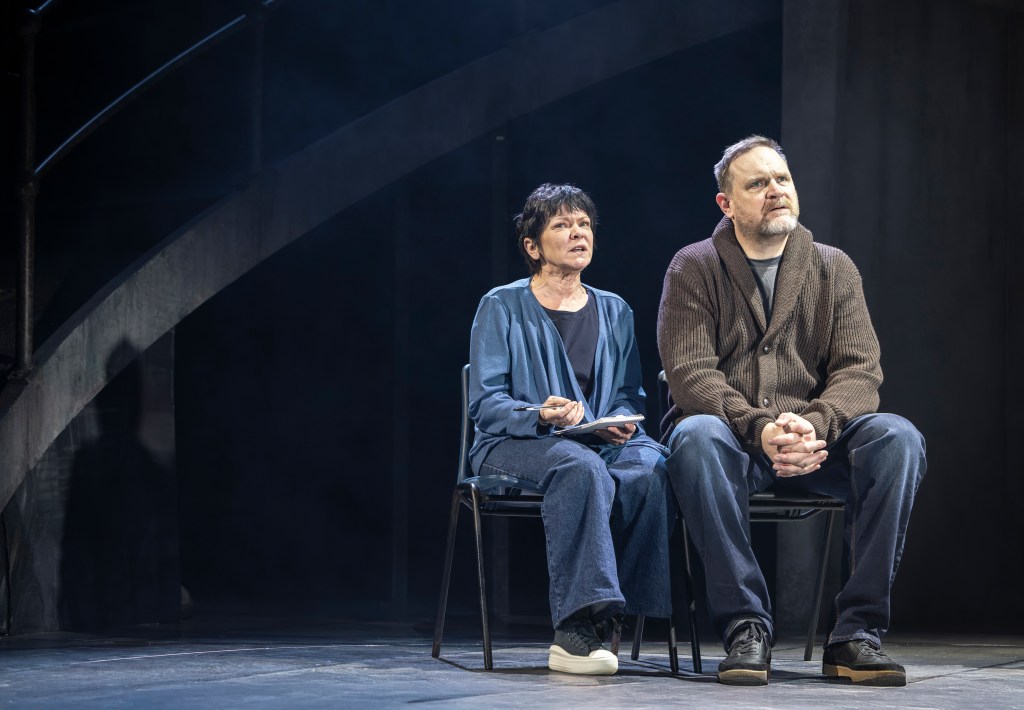
James’s parents Joan, played by Finty Williams, and Derek, Matthew Flynn, preparing their questions.
From the beginning, Joan realised that Jacob was not all bad and she, along with the professionals, encouraged him to go back to education, which he did, eventually getting a degree in criminology. Derek was initially less inclined to be so generous of spirit, even refusing to shake Jacob’s hand as it was the one which led to the death of his son.
The process continued with Jacob writing the book on which this play was based, and, along with Joan, working with the Forgiveness Project doing presentations in schools and prisons explaining the benefits of restorative justice.
Although coming to terms with the situation, they all realised that a life was unnecessarily taken and their relationship was based more on understanding than forgiveness. Jacob has not only gone on to turn his life around through education, but also by forming a relationship with the girl he met before the incident, who is now a nurse, and starting a family together.
As with other James Graham plays, this was presented symbolically rather than as a documentary narrative. The set was sparse and the action involved dancing as well as straight acting. It was also an ensemble piece with all the actors, except for the principal, playing multiple parts. This made it a bit hard to follow at times, especially at the beginning when, as seems to be the norm nowadays, the dialogue was delivered at a hundred miles an hour. It also didn’t help in that the piece was performed in a broad Nottingham accent, especially by Jack James Ryan as Jacob. In the early seventies I worked quite a lot in the East Midlands so it is not alien to me, but I struggled a tad. It is still preferable being done this way, however, than by the use of received pronunciation.
There were a few instances of comic relief, mainly provided by Matthew Flynn as a weird college lecturer seemingly living in a parallel universe. He also excelled as Derek, combining the need to support his wife in the healing process, whilst boiling with rage beneath the surface. Speaking of his wife, Joan was superbly acted by Finty Williams, who also played Jacob’s Nan. She exuded compassion whilst not being able to forgive, but taking the middle road of understanding.
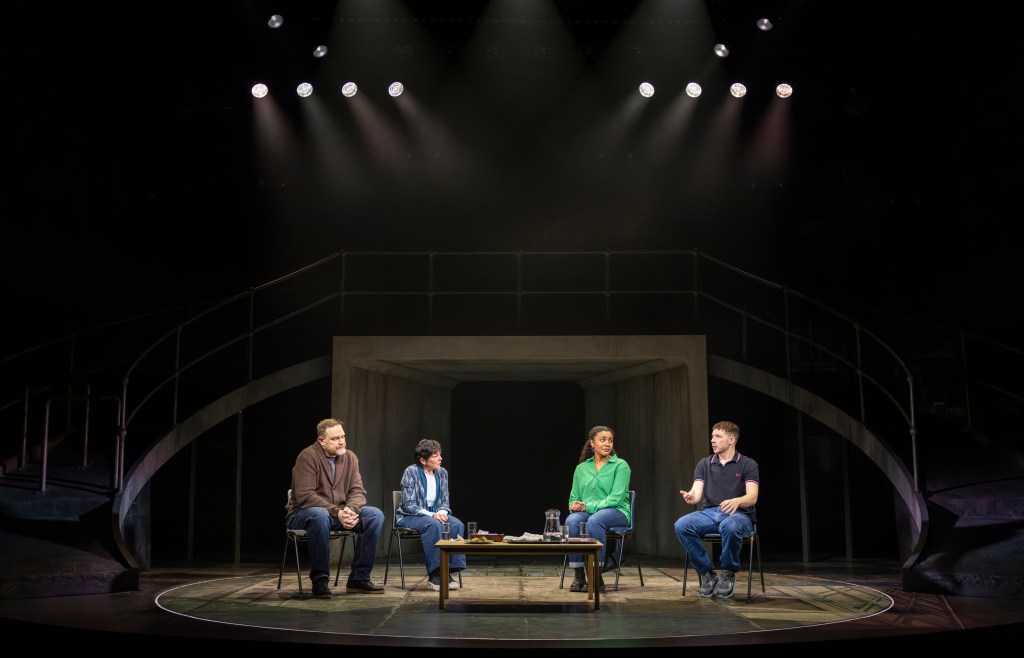
The first meeting with Derek, Joan, the facilitator and Jacob. Matthew Flynn, Finty Williams, Grace Hodgett Young and Jack James Ryan respectively.
Laura Tebbutt combined the roles of Jacob’s Mum and his Probation Officer as well as a gang member. In the first, she instilled the concept of right and wrong into her son from an early age, whilst struggling with her lot; in the second, portraying an overloaded caseworker who somehow managed to juggle her responsibilities and give what support she could. The other females in Jacob’s life, the facilitator of the meetings and the love interest, were brilliantly brought to life by Grace Hodgett Young.

Elan Butler as Raf
The final cast member was Elan Butler who took the roles of Raf, the gang member who made the call to summon Jacob to the rumble and the later one to break the news of the fatal injury, Jacob’s brother Sam and DS Villiers the detective handling the prosecution.
The direction by Adam Penford was, as previously mentioned, varied in execution and stark in presentation, capturing the moods superbly well. I did find the second half to be a bit like a sermon on restorative justice but it does seem to be a method worth introducing to as wide an audience as possible. It would be beyond naive to think that it would be suitable for even a majority of cases, let alone all, as there needs to be an honest and positive approach by all parties concerned, but even if only a small proportion of serious repeat crimes could be prevented, it would be worth the effort.
PUNCH continues at Leeds Playhouse until Saturday, 11th April, 2026. For more information and to book, please go to https://www.leedsplayhouse.org.uk/event/punch/ after which it ends its Spring Tour at Theatre Royal, Plymouth from 14th to 18th April, 2026. https://theatreroyal.com/whats-on/punch/ There is also a 2027 tour planned so please keep your eyes open for that.
To see what else is on at Leeds Playhouse, please go to https://www.leedsplayhouse.org.uk/whats-on/
Photographs by Pamela Raith Photography

